
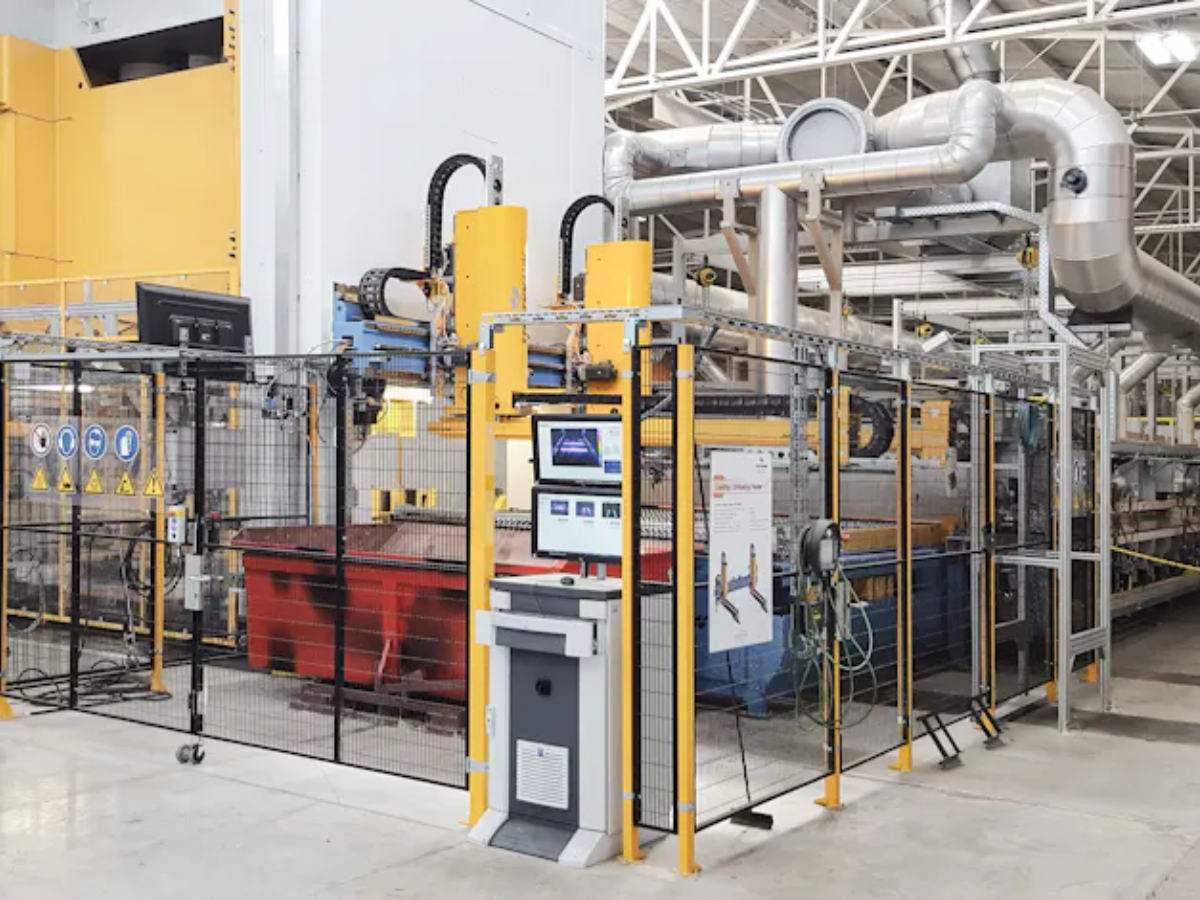
INDU-SCAN system set up in industrial manufacturing environment

Smart Thermographic Automation for Industrial Quality & Process Assurance

Bring real-time thermal intelligence into your production line with the INDU-SCAN Process Control System, a highly flexible, customizable thermography solution engineered by InfraTec for inline quality assurance and temperature-dependent process optimization. 

By integrating powerful InfraTec industrial infrared cameras with advanced software and scalable hardware, INDU-SCAN delivers continuous, contactless temperature measurement, automated data evaluation, and seamless integration into existing machine control systems. 

Whether you’re monitoring plastics welding, die casting stability, crane rope integrity, or other critical manufacturing steps, INDU-SCAN elevates quality control, enhances process stability, and helps prevent costly defects.


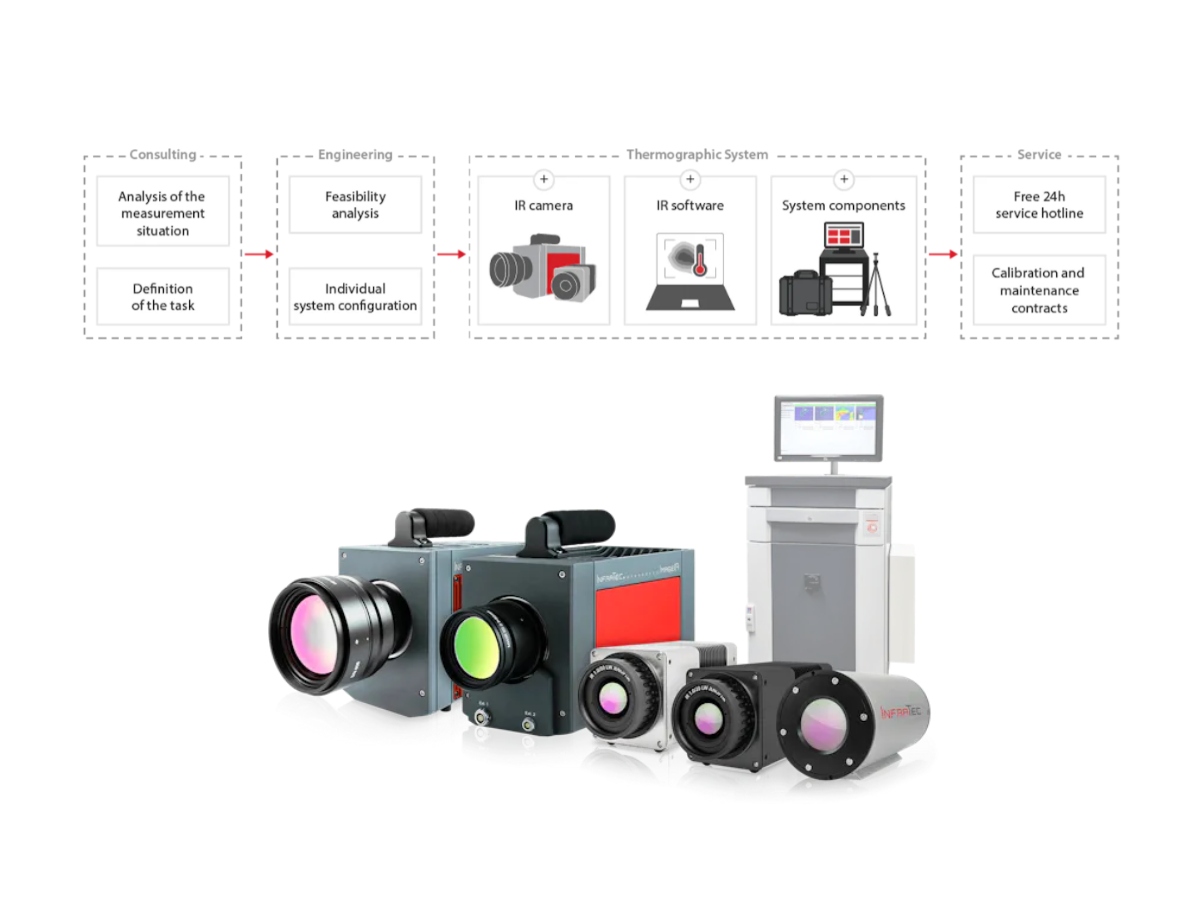
Components of INDU SCAN solution

Scalable and Flexible Solution for Automated Process Monitoring

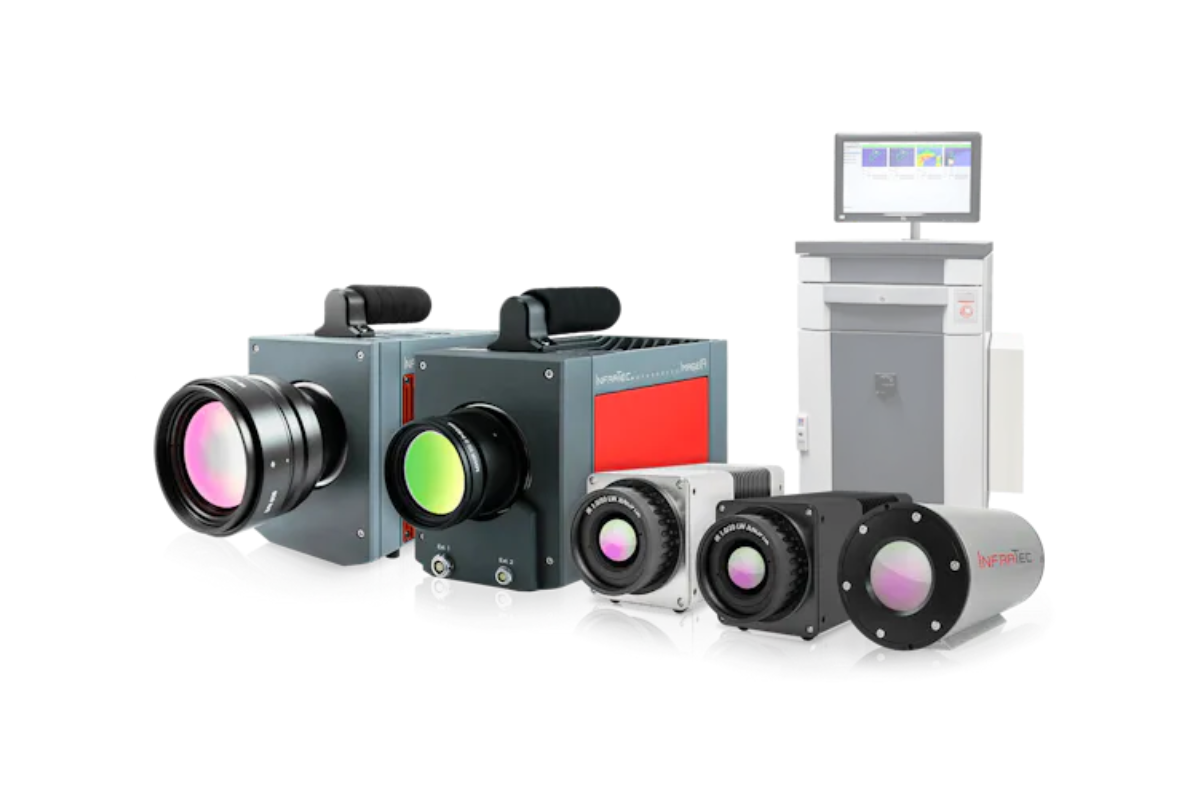
The INDU-SCAN system combines multiple high-performance LWIR thermographic cameras from the InfraTec VarioCAM HD Series or TarisIR Series, with customized software and a robust industrial PC to deliver a tailored solution for continuous monitoring in industrial applications.

It offers easy installation and additional components can be added for future expansion, thanks to it's modular design.

Data transfer from the camera utilizes modern industrial interfaces such as GigE / 10 GigE. Connection to the machine control is achieved via field bus interfaces such as PROFINET, PROFIBUS, CC-Link, and Modbus. Using TCP/IP protocol, specific quality data can be transmitted for processing and storage in central systems for comprehensive analysis.

The INDU-SCAN database offers an interface for storing the quality data in external database systems, allowing you to refine your documentation or directly control your processes. For real-time monitoring, measured values can be compared with defined threshold and limit values, triggering a predefined event such as an alarm.

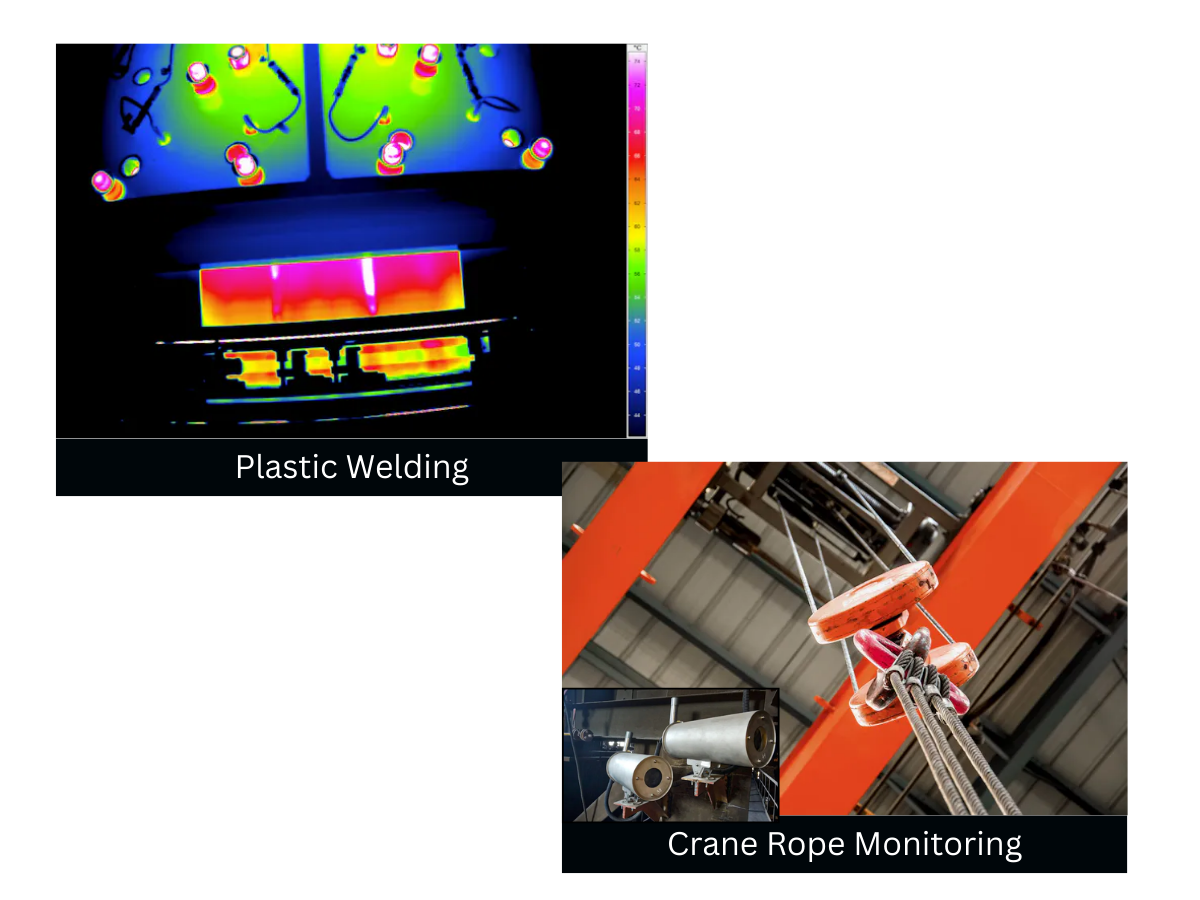
IR image of plastic welding and crane rope with IR cameras in protective housings

INDU-SCAN Automation Solutions Across Industrial Applications

INDU-SCAN in Plastic Welding

INDU-SCAN enables precise, non-contact monitoring of plastic welding processes by analyzing the thermal behavior of the weld zone in real time. Thermographic inspection allows manufacturers to verify weld seam quality, detect temperature deviations, and identify geometric or positioning errors that indicate partially joined components. Inline thermal analysis also supports detection of material defects such as cavities or inclusions, enabling consistent quality control and reliable validation of welded joints, including laser-welded and adhesive connections.


Crane Rope Monitoring in Steelworks

For steel production environments, INDU-SCAN supports fully automated, 24/7 crane rope monitoring using InfraTec infrared cameras. Continuous thermal inspection enables real-time detection of weak points, abnormal heating, and developing defects in crane ropes during operation. This early warning capability helps prevent unplanned downtime, enhances operational safety, and supports predictive maintenance strategies in harsh steelworks environments.

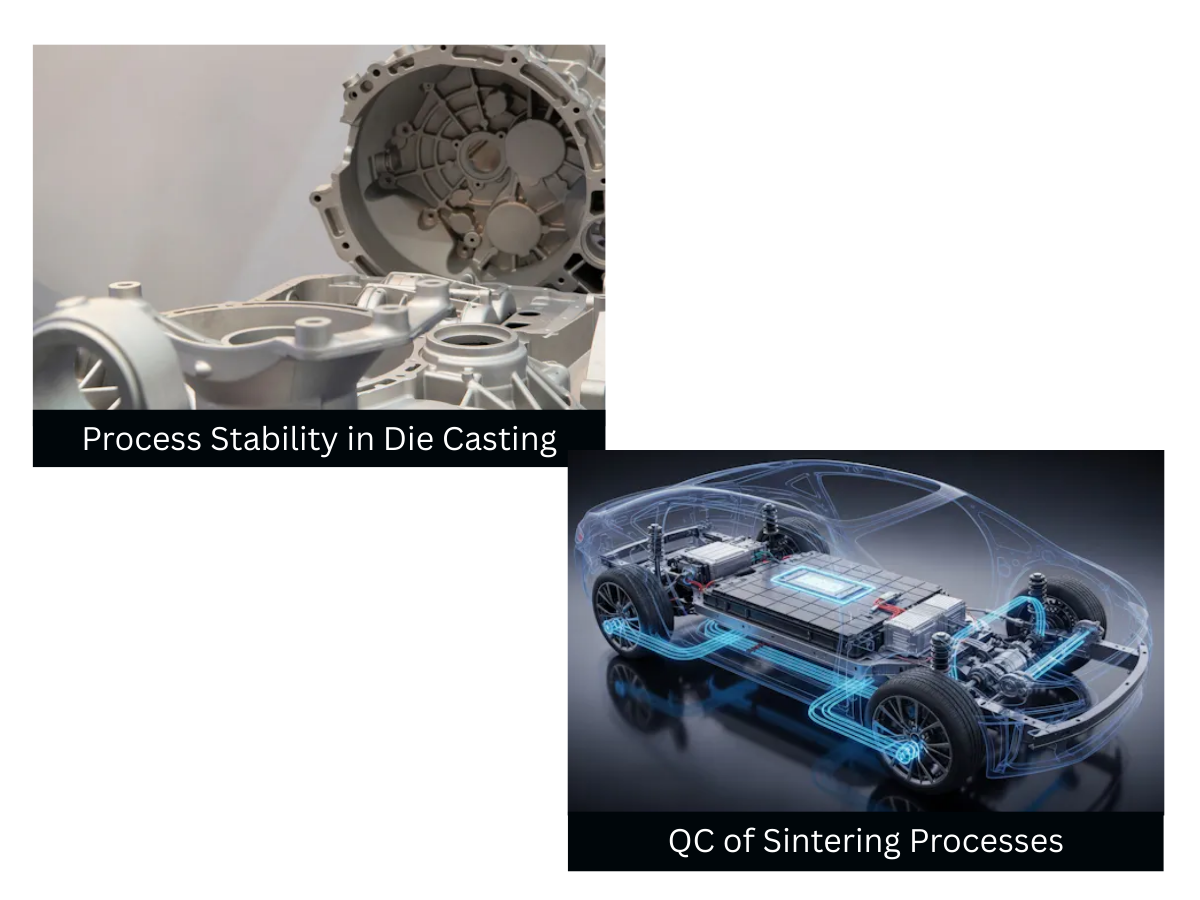
Die casting machinery and image of vehicle demonstrating monitoring of sintering processes

INDU-SCAN Automation Solutions Across Industrial Applications

INDU-SCAN for Improved Process Stability in Die Casting

In pressure die casting, maintaining narrow thermal process windows is critical to preventing defects such as shrinkage porosity and cavities. INDU-SCAN provides inline monitoring of temperature distribution within die casting molds, enabling precise control of tool and process stability. Integrated infrared cameras and robust analysis software deliver reliable thermal data for every cycle, improving component quality, extending tool life, and increasing overall productivity in high-volume die casting operations.


INDU-SCAN for Quality Control of Sintering Processes

INDU-SCAN supports thermal quality assessment of sintered connections in power electronics manufacturing, where reliable heat dissipation is essential for long-term performance. By precisely localizing regions of interest and analyzing temperature behavior during production, thermography reveals defects in thermal interfaces between semiconductor modules and housings. Automated ROI detection and robust image processing ensure consistent inspection results, even across different machines or after system changes, supporting stable, high-quality manufacturing at scale.

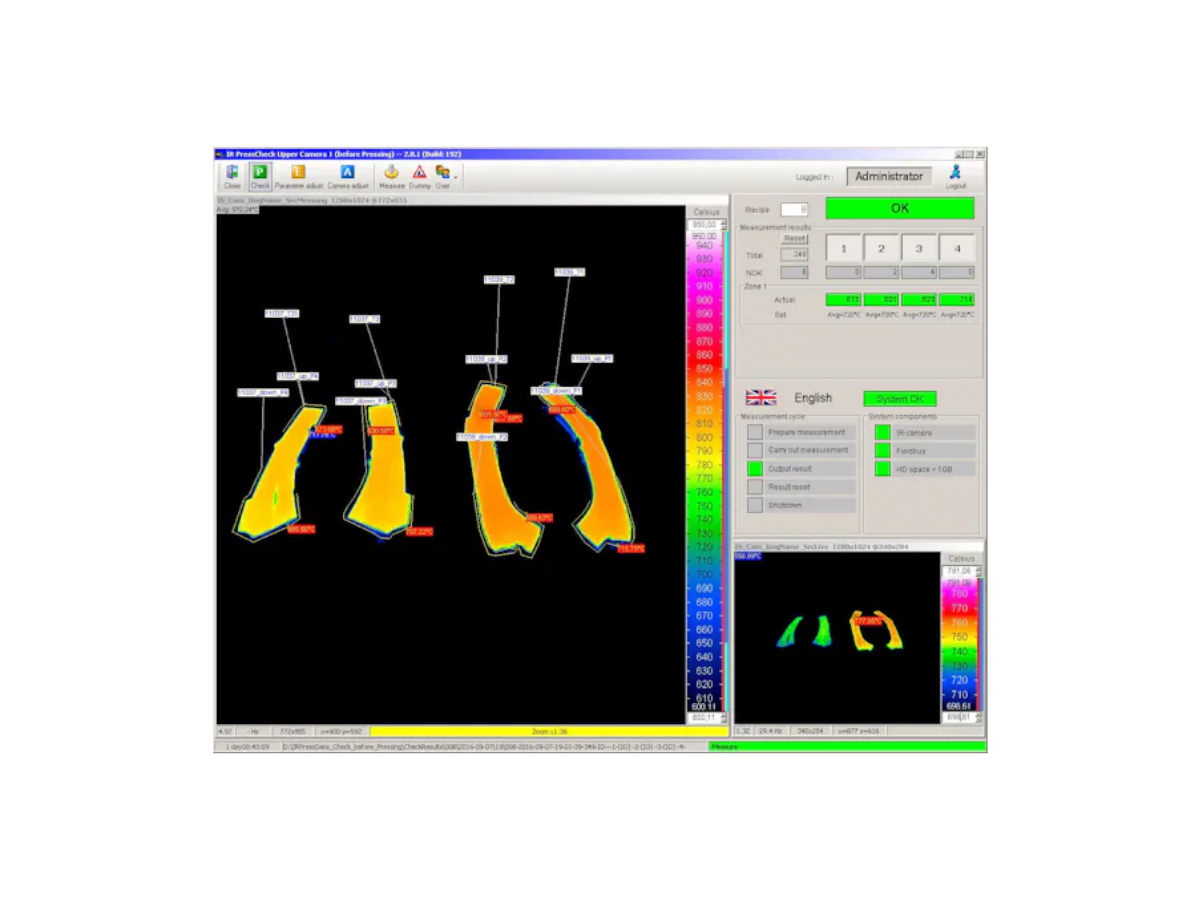
user interface of INDU-SCAN software kit showing key features

INDU-SCAN Software Kit

The INDU-SCAN automation solution delivers application-specific operating and user interface, based on a flexibly configurable software toolkit.


Software Kit Key Features:

  • Simple integration of extensive data analyses
  • Transmission of the measured values
  • Exact coupling of the image to the process cycle as well as a synchronous use of temperature data for process control and quality monitoring
  • User management with different security and protection levels

INDU-SCAN Key Benefits:

  • Modular system: Up to three high-resolution infrared cameras can be used
  • Value for money: A cost-effective and reliable solution
  • Durable: High-quality industrially tested components for fault-free operation 24/7
  • Easy configuration: Separately for camera and control unit
  • Extensive reporting: Detailed event logs for downstream analysis
  • Easy configuration: Separately for camera and control unit
INDU SCAN components

Ideal Solution For:

  • Plastic Welding
  • Crane Rope Monitoring
  • Die Cast Monitoring
  • Film Seal Defect Detection
  • Sintering Monitoring
  • Quality Control of Metal Sheet Joints

The scope of INDU-SCAN 4.0 includes

  • Professional pre-analyses and selection of camera heads and optics according to strict technical measurement criteria of the inspection task
  • Recognition of components and their spatial location (machine learning) as the starting point for simultaneous, partially multi-stage multi-spot analysis
  • Positioning of components using various algorithms
  • Transformation of non-linear thermal signatures and heat flows using state-of-the-art software tools incorporating experience-based algorithms
  • Technical implementation based on a flexible hardware and software kit for fast integration of customer-specific requirements
  • Application of powerful, industrially proved components, that are capable of continuous use
  • Selection between thermographic cameras of different performance classes and spectral ranges, application-specific protective housings and modular system control units
  • Individually configurable system software for smooth interaction of all components